


What Is CNC Coolant?
CNC coolant or cutting fluid is an industrial fluid commonly used in metal cutting operations for improved efficiency. CNC machining coolant comprises special chemical additives formulated through scientific compound concentration. Its primary elements include animal fat, water, petroleum distillate, vegetable oil, and other raw materials.
These coolants improve the CNC machines’ capability to cut materials such as high-density plastics, fiberglass, and metals while reducing high-temperature build-up.
How Do Coolant Systems Work?
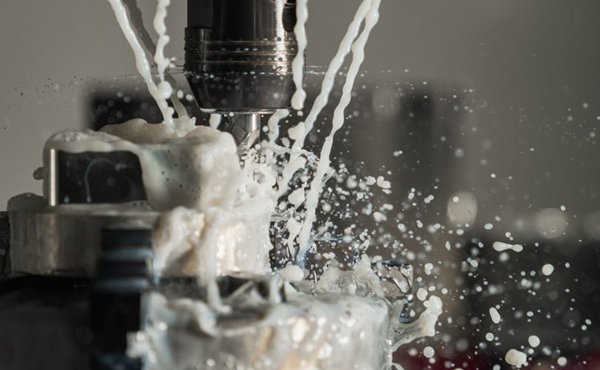
A CNC machine coolant mixture flows over the work area during the CNC machining operations. The coolant washes chips and particles from the work area like a flood. Then it flows into the sump at the machine’s bottom, where you must pump and recirculate it to the work area for continuous use.
The coolant cools the workpiece when machining at high speeds and lubricates the cutting tool at low speeds. Therefore, the CNC coolant increases the cutting tool’s lifespan by protecting it from corrosion and safeguarding the workpiece from deformation. To ensure peak performance, you must monitor, maintain, and adjust central and single CNC machine coolant systems.
However, a small coolant system uses a less effective component for its oil separation and filtration, resulting in consistent changes and greater variation in concentration levels. So, using coolants less susceptible to contamination from shavings in small systems would be best.

Various Coolant Delivery In CNC Machines
Different CNC machines make use of coolants with varying properties and pressure. Hence, choosing your CNC machine’s ideal coolant delivery mechanism is essential. Failure to choose the appropriate amount can cause quick exhaustion of the workshop’s resources, while the wrong pressure can damage the workpiece or the CNC cutting tools. Here are some of the common types of coolant delivery in CNC machines:
Mist Cooling Mechanism
This coolant delivery method uses a low pressure suitable for operations where heat and chip removal is not a primary concern. As such, mist cooling doesn’t subject the tool and the workpiece to additional stresses since high pressure is not applied.
Air Cooling Mechanism
The air cooling technique is not ideal for lubricity purposes but helps to reduce heat and extract chips. Air cooling delivery is less effective because it doesn’t contain oil or water-based coolant.
Moreover, the air cooling mechanism is ideal for direct contact with a workpiece when dealing with more sensitive materials. However, it is suitable for plastic materials susceptible to thermal shock or rapid expansion because direct coolant often leads to contraction in the part.
Minimum Quality Lubricant (MQL) Mechanism
The priority of each CNC shop is to achieve a competitive edge by improving workshop efficiency, increasing production, and reducing costs. As a result, CNC shops often resort to MQL due to its environmental benefits.
MQL mechanism reduces cost and material wastage by using the required amount of coolant. They are usually in a very fine mist or aerosol form, providing adequate coolant to execute a defined operation effectively.
Types Of CNC Machining Coolants
Machining coolants are in four major categories with their respective formulations. However, it would help to choose a coolant based on its efficiency and comprehensive performance, considering the material and machining process involved. Below are the common types of machine coolant.
Synthetic Fluids
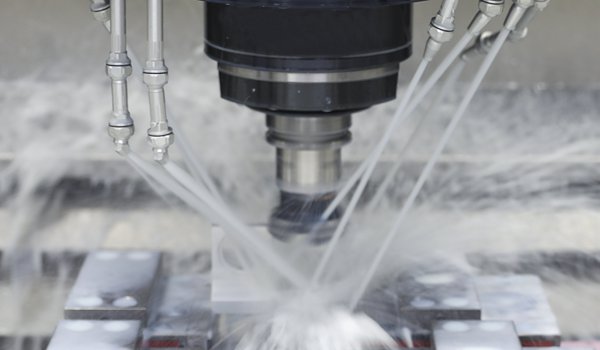
These coolants are the cleanest because they do not contain petroleum or mineral oil. Synthetic fluids comprise rust inhibitors and chemical lubricants that break down in water. These fluids are mixed with water to produce a metalworking fluid. Therefore, these CNC coolants possess high cooling capacity, corrosion prevention, easy maintenance, and lubricity.
Moreover, synthetic fluids are primarily employed in high-heat, high-velocity machining processes like surface grinding because of their excellent cooling capacity. Heavy-duty synthetic fluids are ideal for handling several machining operations.
Synthetics are categorized as simple and complex or emulsifiable synthetics depending on their composition. Simple synthetics or true solutions are commonly used for light-duty grinding. On the other hand, complex synthetic concentrates contain synthetic fluids suitable for moderate to heavy-duty machining procedures. More importantly, complex synthetic lubricants allow high speeds and feed in machining operations.
Pros
- Synthetic fluids exhibit high microbial control and excellent resistance to rancidity.
- These lubricants provide excellent resistance to corrosion and high cooling capability.
- They offer greater stability after mixing with water.
- Synthetics allow easy maintenance because they are clean and suitable for various machining operations.
Cons
- Machine fluids, such as lubricating oils, can contaminate synthetic fluids easily. Hence, you have to manage and maintain these fluids effectively.
- Synthetics generate fine mists or foam due to moderate to high agitation conditions, even though they are less vulnerable to issues related to oil-based fluids.
CNC Coolant Concentration Chart
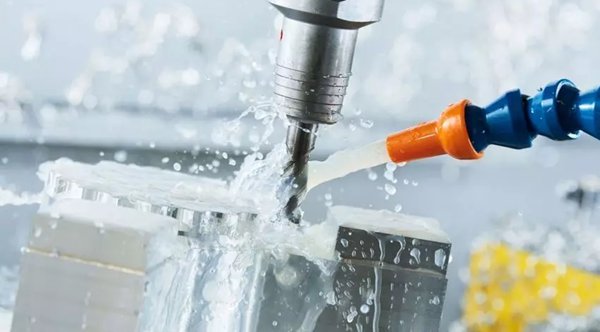
Below is a coolant concentration chart containing variations in the CNC coolant concentration levels:
| Material | Milling | Turning | Drilling | Tapping |
| Copper | Soluble oil | Soluble oil | Soluble oil | Soluble oil |
| Aluminum | Mineral oil or soluble oil (with 96% water) | Mineral oil with soluble oil (or) 10% fat | Soluble oil (with 70-90% water) | Mineral oil mixed with 25% based oil |
| Bronze | Soluble oil | Soluble oil | Soluble oil | Mineral oil with 30% lard |
| Low Carbon and Tool Steel | Soluble oil | 75% mineral with and 25% lard oil | Soluble oil | Mineral oil with 25%-40% lard oil |
| Malleable Iron | Soluble oil | Soluble oil | Soluble oil | Soluble oil |
| Alloy Steels | 90% mineral oil with 10% lard oil | 75% mineral oil with 25% sulfur base oil | Soluble oil | 70% mineral oil with 30% lard oil |
| Brass | Soluble oil (with 96% water content) | Mineral oil with 10% fat | Soluble oil | Mineral oil with 10% – 20% lard oil |
| Cast Iron | Dry | Dry | Dry | 25% lard oil with 80% mineral oil or dry |